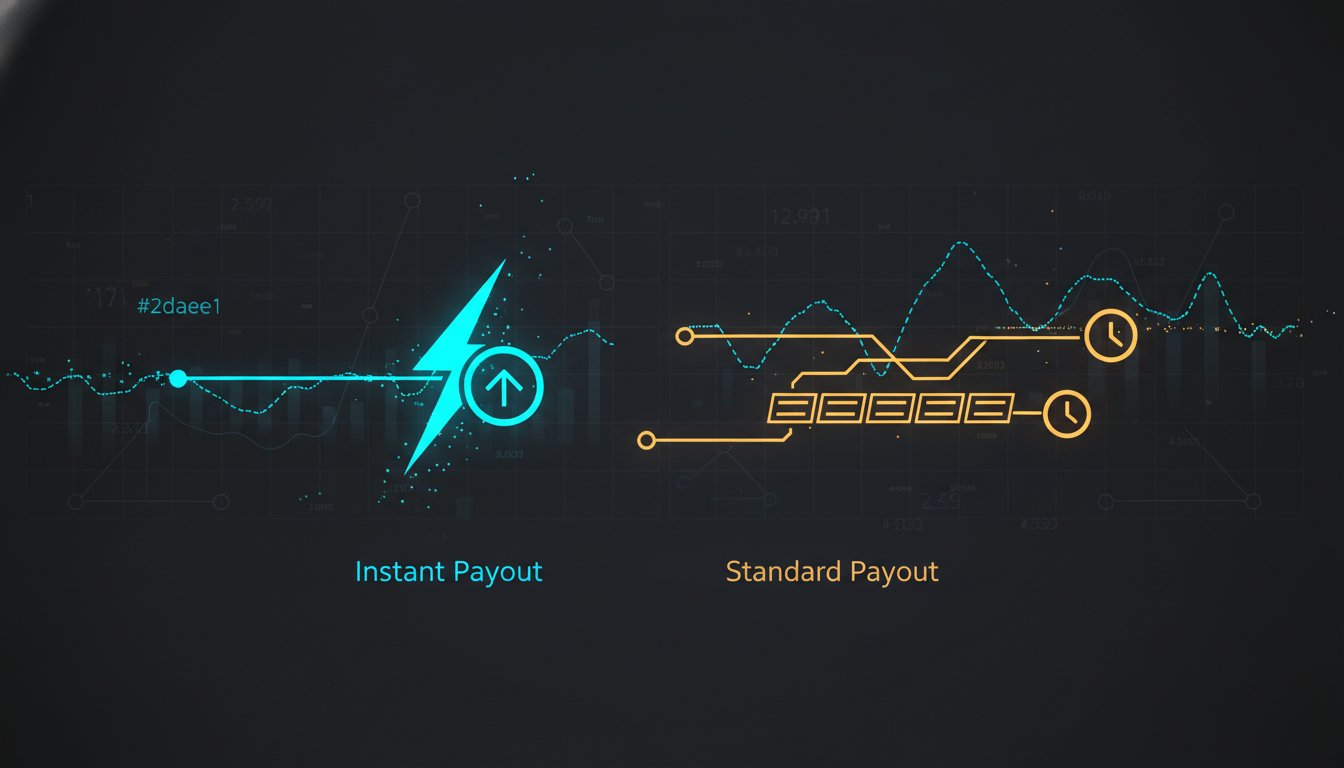
Is your payment data a strategic asset or a reconciliation nightmare? Most merchants lose hours every week manually stitching together online and in-person sales records. It's an inefficient process that hides critical cash flow insights and leaves gaps for fraud to go unnoticed. Data silos between sales channels create blind spots that hinder growth and complicate compliance with standards like PCI DSS 4.0.
You need a single source of truth. This guide shows you how to leverage advanced merchant dashboard reporting to centralize your operations. You'll learn to master the specific metrics that drive growth and transform raw transaction data into actionable business intelligence. We've moved beyond simple record-keeping; reporting is now the primary engine for future execution.
We'll examine how a unified dashboard provides real-time visibility into your cash flow and automates tedious reconciliation tasks. We also preview the impact of real-time payments and the importance of understanding customer payment preferences through data. Prepare to turn your reporting from a passive log into a powerful tool for scale.
Key Takeaways
- Transition from static monthly statements to a real-time command center for total financial visibility.
- Identify high-impact metrics beyond net sales to pinpoint operational inefficiencies and growth opportunities.
- Utilize merchant dashboard reporting to consolidate over 100 payment methods into a single, unified data stream via one API.
- Apply a systematic framework to convert raw payment analytics into immediate, strategic business optimizations.
- Streamline global operations using secure, technologically advanced infrastructure designed for high-growth scalability.
What is Merchant Dashboard Reporting in the Modern Economy?
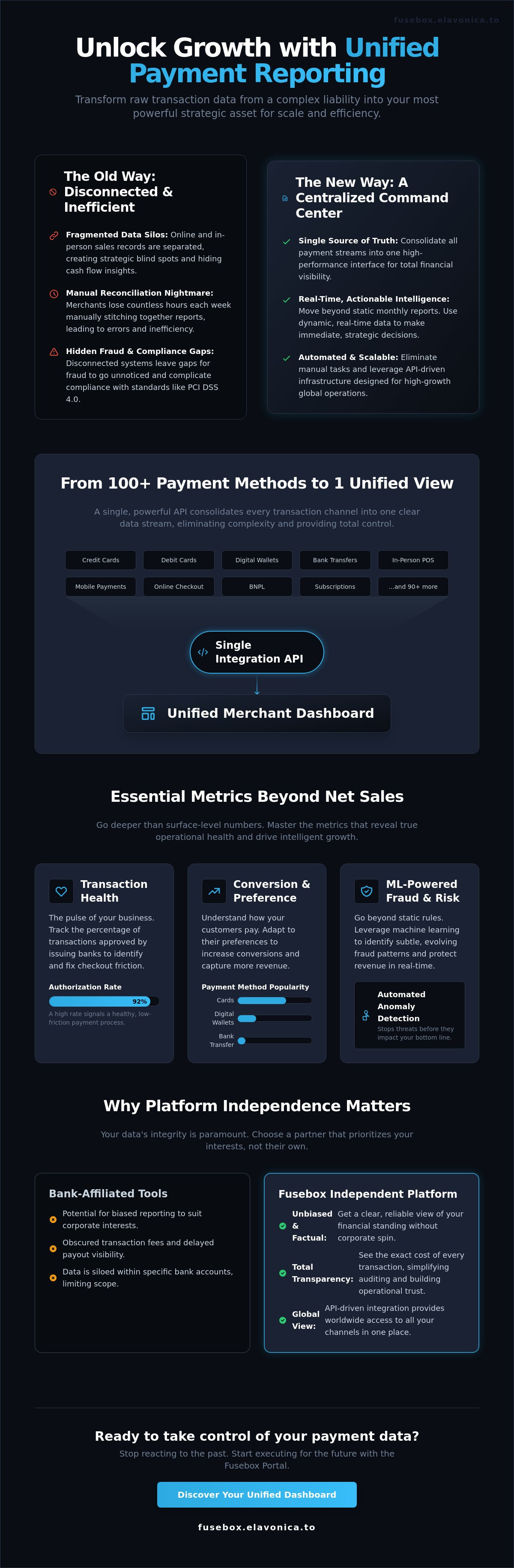
Merchant dashboard reporting functions as a centralized command center for your financial health. It is no longer a passive record of past transactions. It is a dynamic tool for future execution. In the modern economy, fragmented data is a strategic liability. A digital dashboard consolidates complex payment streams into a single, high-performance interface. This allows for immediate oversight of cash flow and operational stability. Traditional reporting relies on static, end-of-month statements. These are historical artifacts. Modern reporting uses real-time visualization to show what is happening now. It bridges the gap between raw data and business intelligence.
Traditional bank reporting often stays siloed within specific accounts. It lacks the breadth needed for a global business. Modern, API-driven dashboards change this by integrating every channel into a unified view. This transparency is critical for merchants managing high volumes across diverse markets. Merchant dashboard reporting ensures you don't just see numbers; you see the path to your next scale-up.
The Evolution of Payment Data Visibility
Visibility has evolved from manual ledger entries to automated API feeds. Legacy systems required human intervention for reconciliation. That is too slow for 2026. Real-time data is a requirement, not a luxury. API-driven dashboards eliminate the lag between a transaction and its reporting. They pull data directly from the source. This removes errors associated with manual entry. Cloud-based portals provide worldwide access to your information. Monitor performance in London from an office in New York instantly. You gain speed. You gain accuracy. You gain control.
Real-time visibility offers distinct operational advantages:
- Immediate fraud detection: Spot anomalies as they happen to protect revenue.
- Accurate inventory management: Sync sales data with stock levels across all channels.
- Precise cash flow forecasting: Know exactly what is hitting your account today.
Why Independence Matters in Reporting
Independence drives integrity. Utilizing an independent platform like Elavon Fusebox ensures your reporting is unbiased. Some bank-affiliated tools prioritize corporate interests. They might obscure transaction fees or delay payout visibility to suit their own balance sheets. Elavon Fusebox provides total transparency. You see the exact cost of every transaction. No corporate spin. Reliability is the priority. You get a clear, factual view of your financial standing. This no-nonsense approach simplifies auditing and builds operational trust. It is about having a partner that values your data as much as you do.
Essential Metrics for Your Payment Reporting Dashboard
Net sales provide a surface-level view of your business. They don't tell the whole story. Real growth requires a deeper dive into the transaction lifecycle. Effective merchant dashboard reporting tracks every stage from the initial swipe or click to the final settlement in your bank account. This granularity exposes hidden costs. Interchange fees, processing surcharges, and cross-border taxes can erode your margins if left unmonitored. Understanding these levers allows you to optimize for efficiency rather than just volume. You need to see the "why" behind the numbers to make informed decisions.
A unified view of your transaction health ensures you aren't losing money to technical errors or inefficient routing. By tracking the entire lifecycle, you can identify where capital is tied up and where processing costs are highest. This data-driven approach transforms reporting from a passive record into a proactive management tool. It's about protecting your bottom line through total visibility.
Transaction Health and Conversion Rates
The authorization rate is the pulse of your business. It measures the percentage of transactions approved by the issuing bank. It is the most critical metric for growth. A low rate signals checkout friction or technical failures that cost you sales. By comparing successful and failed payments, you can pinpoint exactly where customers drop off. Monitoring payment method popularity is equally vital. If your customers prefer digital wallets over traditional cards, your dashboard should reflect that shift immediately. Use these insights to refine your checkout experience and capture more revenue by offering the right options.
ML-Powered Fraud and Risk Metrics
Static rules aren't enough to stop modern fraud. Machine learning (ML) identifies subtle patterns that manual reviews overlook. Your dashboard should visualize these ML-driven insights in real-time. Track chargeback ratios meticulously to stay within card network limits. High-risk geographical zones often emerge in the data. This allows you to adjust security filters dynamically for specific regions. Real-time fraud scoring within your dashboard empowers you to block suspicious activity without impacting legitimate customers. This proactive stance protects your reputation and your revenue. It's a high-tech shield for your digital storefront.
Payout Timelines and Liquidity Tracking
Liquidity is the lifeblood of your operation. Distinguishing between "Pending" and "Available" balances is critical for cash flow management. Effective reporting tracks these funds as they move toward your bank account. This visibility supports next-day or instant payouts, giving you faster access to capital. Reconciling payout fees across different destination countries ensures you aren't overpaying for international transfers. Managing these logistics becomes seamless when you integrate advanced payouts tracking into your daily operations. Knowing exactly when funds will land helps you plan inventory and payroll with total confidence.
The Power of Unified Data: Consolidating 100+ Payment Methods
Managing credit cards, ACH transfers, and digital wallets in isolation is a structural failure. It forces finance teams to log into multiple portals with differing data schemas and settlement cycles. This fragmentation leads to human error. It causes delayed reporting. Elavon Fusebox solves this by funneling every transaction into one environment via a single API. This unified merchant dashboard reporting provides a global view of transactions in a single currency. It eliminates the need for manual conversion during analysis. You see exactly what you've earned across all regions instantly. One integration. Total visibility.
Efficiency is the primary benefit. When your data is consolidated, tax season and year-end audits become streamlined processes rather than month-long projects. You have a documented, immutable trail for every cent. This level of organization isn't just about convenience. It's about operational integrity. A centralized system ensures your financial records are always audit-ready. It reduces the administrative burden on your accounting staff. They spend less time hunting for data and more time analyzing it for growth. Clean data drives clean audits.
Eliminating Data Silos Between Sales Channels
Separate reporting tools for online and in-person sales create friction. They hide the true behavior of your customers. Elavon Fusebox provides a single source of truth for your entire business. Omnichannel retailers gain a bird's-eye view of their performance across every touchpoint. This transparency allows you to see how a promotion in-store affects online sales. No more guessing. No more manual data merging. Just clear, actionable insights. You can track a customer's journey from a mobile payment to an in-store return without losing the data trail. It's total visibility for a complex retail world. Modern merchant dashboard reporting connects the dots between every sale.
Reconciling Alternative Payment Methods (APMs)
Alternative payment methods like digital wallets often come with complex reporting structures. They settle at different times. They use different fee models. Reconciling these manually is a drain on resources. Elavon Fusebox standardizes data from over 100 payment methods into a consistent format. It automates the reconciliation process. This automation saves hundreds of hours annually. You get clean data without the manual labor. Whether it's a local wallet in Asia or a standard card in Europe, the data looks the same on your screen. This standardization is the key to scaling internationally without ballooning your overhead. You focus on the expansion. We focus on the data.
Turning Analytics into Action: Strategic Optimization
Data visibility is only the first step. True optimization happens when you translate charts into changes. Merchant dashboard reporting serves as a diagnostic engine. It identifies friction points before they become revenue leaks. Use a feature-then-benefit approach to analysis. Don't just look at a high decline rate. Look at the reason codes. Identify the technical cause. Fix the routing. The benefit is immediate revenue recovery. This methodical approach ensures every adjustment to your payment stack is backed by empirical evidence.
Automated alerts are essential for modern scale. Set specific thresholds for authorization rates or chargeback ratios. If a metric dips below your baseline, the system notifies you instantly. This shifts your role from manual monitor to strategic executor. You don't wait for a monthly review to address a problem. You act in real-time. In 2026, with PCI DSS v4.0 assessments in full effect, your reporting must prove continuous monitoring. Automated alerts ensure you maintain compliance while protecting your margins.
Reducing Churn and Improving Retention
Decline codes reveal why customers leave. Insufficient funds suggest a smart retry strategy. Expired cards require automated outreach before the transaction fails. Use these insights to reduce involuntary churn. Loyal customers deserve recognition. Identify high-value accounts through transaction frequency and volume. Reward them with tailored incentives or preferred payment options. This turns payment data into a retention tool. It's about using your dashboard to build a more resilient customer base.
Optimising Cash Flow and Payout Speed
Liquidity requires precision. Use reporting to determine when to trigger instant payouts. High-volume periods might require faster access to capital for inventory or payroll. Analyze historical data to balance the cost of speed against your operational needs. For international expansion, track payout efficiency in each new market. If local settlement is slow, adjust your provider strategy. You can optimize your strategic execution by aligning your payouts with your growth trajectory. Efficient cash flow management is the difference between surviving and scaling.
Strategic optimization is a continuous cycle. It requires a platform that delivers clean data and the tools to act on it. Your dashboard should help you answer the most critical question: what change will drive the most growth today? By focusing on actionable metrics, you turn a cost center into a competitive advantage.
Streamline Operations with Elavon Fusebox Reporting
Elavon Fusebox is the infrastructure for modern growth. It replaces fragmented legacy systems with a single, authoritative interface. One API. Over 100 payment methods. All your data in one place. This isn't just a convenience. It's an engine for operational speed. Your merchant dashboard reporting should be a tool for execution, not a source of confusion. We provide an environment built for professional clarity. No fluff. No unnecessary jargon. Just actionable intelligence delivered through a high-performance UI.
The interface prioritizes efficiency. Every feature serves a functional purpose. You navigate from broad sales overviews to granular transaction details in seconds. This directness saves time. It allows your team to focus on strategy rather than data hunting. We act as a silent but powerful engine for your financial operations. It's a partnership built on logic and streamlined processes. Our technology handles the complexity so you can focus on the results.
Secure Infrastructure for Sensitive Data
Security is the foundation of our technology. We employ rigorous protocols to protect merchant and customer information at every touchpoint. Our platform is built for high-volume reliability. It serves merchants of all sizes with the same level of architectural integrity. Whether you process a thousand transactions or a million, the infrastructure remains stable. It's a secure, technologically advanced partner for your most sensitive financial data.
Our independent status is a core advantage. We aren't affiliated with specific banking institutions. This independence ensures your reporting remains transparent and unbiased. You get the facts. No corporate spin. Just secure, reliable data you can trust for every audit. We prioritize your data's integrity over everything else. This commitment to transparency makes Elavon Fusebox a reliable facilitator for your global business needs.
Next Steps for Data-Driven Merchants
Operational efficiency is a choice. Integrating a unified reporting tool eliminates the friction of manual data management. It recovers lost hours. The Elavon Fusebox API is designed for seamless integration. You can deploy quickly and see immediate results. Start transforming your raw payment data into business intelligence today. It's time to move beyond manual reconciliation.
If your organization has complex reporting requirements, we provide a clear path to advanced solutions. Our technical infrastructure scales with your ambition. Don't let siloed data or manual reconciliation hold back your international expansion. Act now to centralize your command center. Access real-time insights. Automate your reconciliation. Master the metrics that drive your bottom line. We value your time as much as we value operational speed.
Scale your business with Elavon Fusebox unified reporting
Accelerate Your Global Growth Strategy
Data is the primary engine of 2026 commerce. Static reporting is obsolete. A unified command center turns fragmented transaction logs into a roadmap for rapid expansion. By consolidating over 100 payment methods into a single view, you eliminate operational friction and gain total visibility. Modern merchant dashboard reporting isn't just about recording what happened yesterday. It's about predicting what's next through ML-powered fraud detection and optimized authorization rates. These tools provide the precision needed to scale securely in a volatile market.
Efficiency drives scale. Access to instant payouts worldwide ensures your capital is always working for you. You've seen how precise metrics and automated alerts transform passive monitoring into strategic execution. The infrastructure you choose today determines your operational speed tomorrow. Don't let siloed data or manual reconciliation limit your growth potential. It's time to transition to a high-performance reporting environment that prioritizes your time and your bottom line.
Streamline your payments with Fusebox Portal and leverage a unified API designed for global commerce. Protect your revenue with machine learning. Accelerate your cash flow with instant settlement. Take control of your financial future with a partner built for the modern economy.
Frequently Asked Questions
What is a merchant dashboard?
A merchant dashboard is a centralized digital interface that aggregates transaction data from all sales channels into a single view. It provides real-time visibility into your financial health by displaying sales volumes, authorization rates, and payout statuses. This tool acts as the primary command center for managing payments and identifying growth opportunities through data visualization. It transforms raw numbers into actionable intelligence for your business.
How often does reporting data update in a merchant portal?
Modern merchant portals update reporting data in real-time or near-real-time. As soon as a transaction is processed through the gateway, it appears in your dashboard analytics. This immediate feedback loop is essential for monitoring cash flow and responding to sudden shifts in sales volume or technical issues at the checkout. You don't have to wait for end-of-day batches to see your performance.
Can I track both online and in-person sales in one dashboard?
Yes, unified commerce platforms consolidate online and in-person transactions into one comprehensive report. This eliminates data silos between your digital storefront and physical locations. You gain a holistic view of customer behavior and inventory movement across your entire business ecosystem without manual data merging. It provides a single source of truth for your omnichannel operations.
What are the most important KPIs for a merchant reporting dashboard?
The most critical KPIs include authorization rates, chargeback ratios, and net settlement volumes. You should also monitor refund rates and payment method popularity to optimize your checkout experience. Effective merchant dashboard reporting prioritizes these metrics to give you a clear understanding of operational efficiency and bottom-line impact. Tracking these levers helps you identify where capital is tied up or lost.
How does automated reconciliation work for different payment methods?
Automated reconciliation standardizes data from diverse sources like credit cards, digital wallets, and ACH transfers into a single format. The system matches transaction records with bank settlements automatically. This process removes the need for manual spreadsheets and significantly reduces the risk of human error during financial audits. You save hundreds of hours annually by eliminating the administrative burden of manual matching.
Is fraud detection included in merchant reporting?
Advanced platforms integrate ML-powered fraud and risk metrics directly into the reporting interface. You can track real-time fraud scores, monitor high-risk geographical zones, and analyze chargeback patterns. This proactive visibility allows you to adjust security filters dynamically and protect your revenue before losses occur. It acts as a high-tech shield for your digital and physical storefronts.
How do I export data from my merchant dashboard for accounting?
You can export data via standard file formats like CSV or PDF, or automate the process through direct API integrations with accounting software. Many merchants schedule recurring exports to streamline their month-end closing procedures. This ensures your financial team has access to clean, audit-ready data without manual intervention. It's a fast, methodical way to maintain your financial records.
Can I manage multiple business locations from a single dashboard?
Yes, the dashboard architecture supports multi-entity management, allowing you to toggle between different locations or view aggregated data for the entire enterprise. You can set granular permissions for different users at each site. This centralized approach simplifies global operations and ensures consistent merchant dashboard reporting standards across all business units. It provides the infrastructure needed for high-growth scalability.